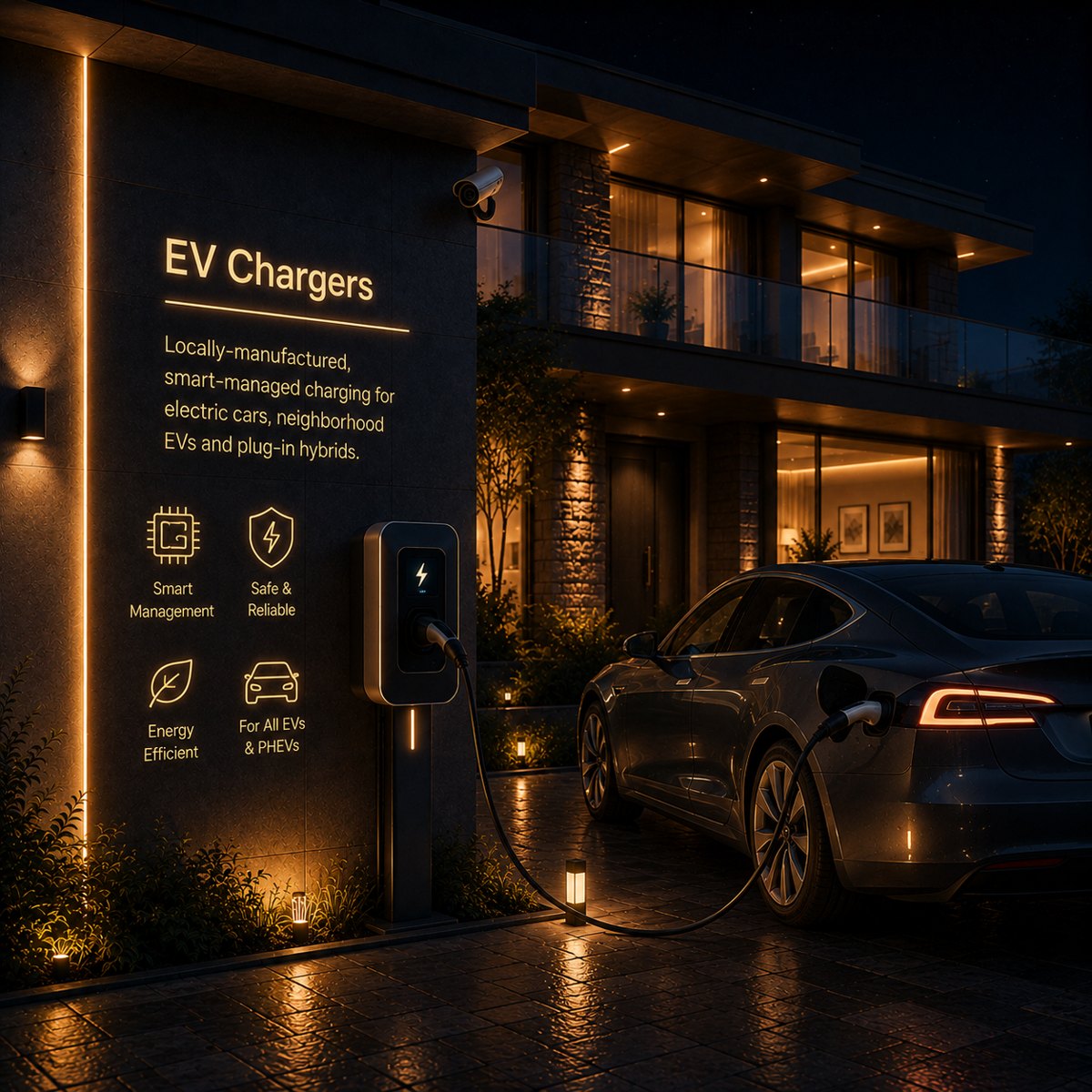
Charging your electric car at home is cheaper, faster and far more convenient than relying on public stations. But a safe, future-proof install is about more than plugging in a box on the wall. Here's what you need to know before installing an EV charger at home.
Charger types & speeds
- Standard socket (slow): works in an emergency but is very slow and not designed for daily charging.
- Wall-mounted AC charger (recommended): a dedicated home "wallbox" that charges several times faster and safely — the right choice for daily use.
- Charger power: sized to your car and your electrical supply; a professional matches the two so you get the fastest safe charge.
What to check before installing
- Your electrical supply: can your panel handle the extra load? This is the most important check.
- Cable route & location: distance from the panel to the parking spot affects cabling and cost.
- Protection: a proper install includes the right breaker and earth-leakage protection for safety.
The single most important factor is smart load management — it balances the charger with the rest of your home so you never trip the main breaker or overload the supply.
Safety & smart features
A quality charger adds real value: scheduling to charge on cheaper off-peak hours, app monitoring, access control so only you can use it, and load management that protects your electrical system. For homes with solar, the charger can even prioritise charging from your own panels.
What affects the cost
- Charger power and brand.
- Distance from the electrical panel and cabling.
- Any panel upgrade needed for the extra load.
- Smart features (load management, app, access control).
Charge at home, safely and smartly
Our engineers assess your supply and install a safe, smart-managed EV charger — for homes, businesses and fleets across Egypt, the UAE and Saudi Arabia.
Request a free assessment