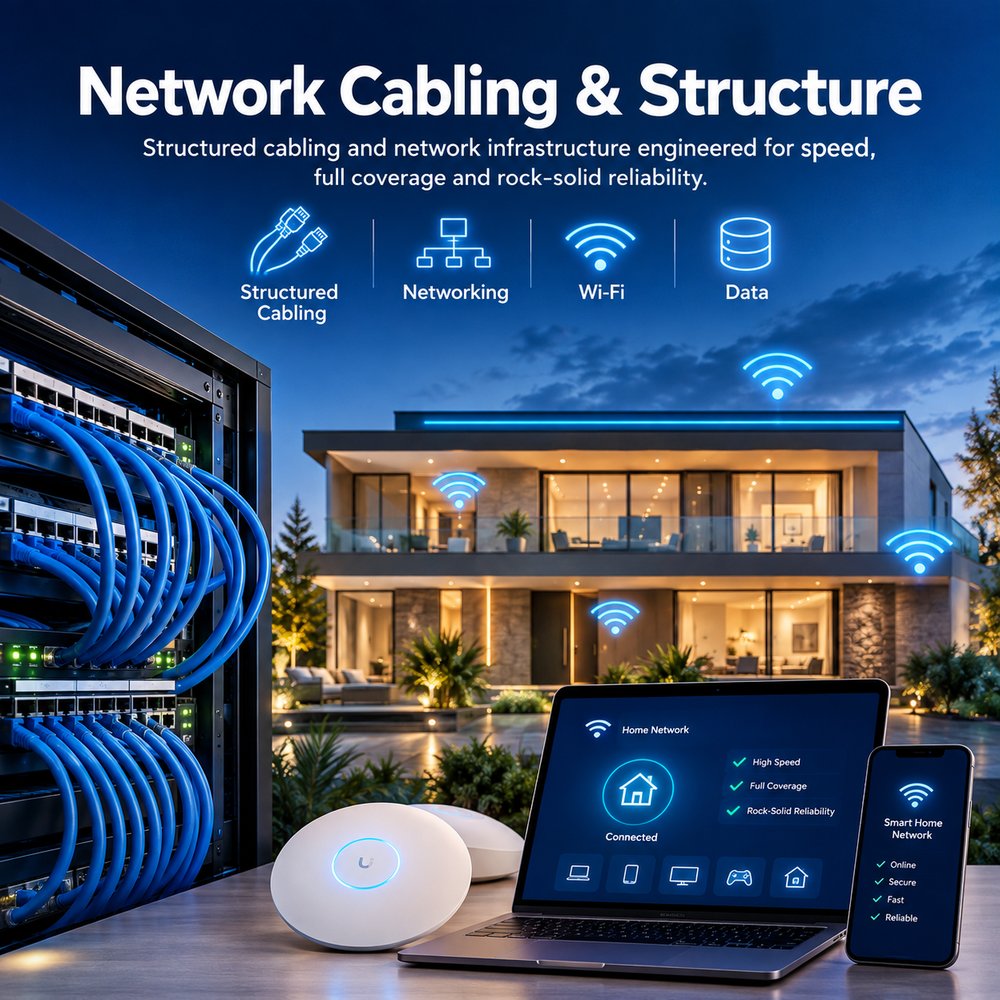
Every smart home and modern building runs on one invisible foundation: the network. Cameras, automation, Wi-Fi, TVs and phones all depend on it. Get the cabling right and everything just works; get it wrong and you'll fight dropouts and dead zones for years. Here's what structured cabling is and why it matters.
What is structured cabling?
Structured cabling is a planned, standardised network of cables and hardware that connects every point in a building back to a central location. Instead of messy, one-off wiring, everything follows one organised system — making it fast, reliable and easy to expand or troubleshoot.
Why Wi-Fi alone isn't enough
Wi-Fi is convenient, but it's only as good as the wired network behind it. Thick walls, distance and interference create dead zones. A proper design uses wired backbones feeding well-placed access points, so you get strong, stable coverage everywhere — not just next to the router.
What a good network includes
- Structured cabling to every room and device point.
- A central rack housing the switch, router and patch panel.
- Well-placed access points for seamless Wi-Fi coverage.
- Capacity headroom so the network handles future devices and higher speeds.
Planning tips
- Design the network during the building phase, not after.
- Add more cable points than you think you need — they're cheap now, costly later.
- Use quality components and proper certification/testing.
- Keep the central rack accessible and well-ventilated.
Build a network that never lets you down
Our engineers design and install structured cabling and networks for homes and businesses — across Egypt, the UAE and Saudi Arabia.
Request a free consultation