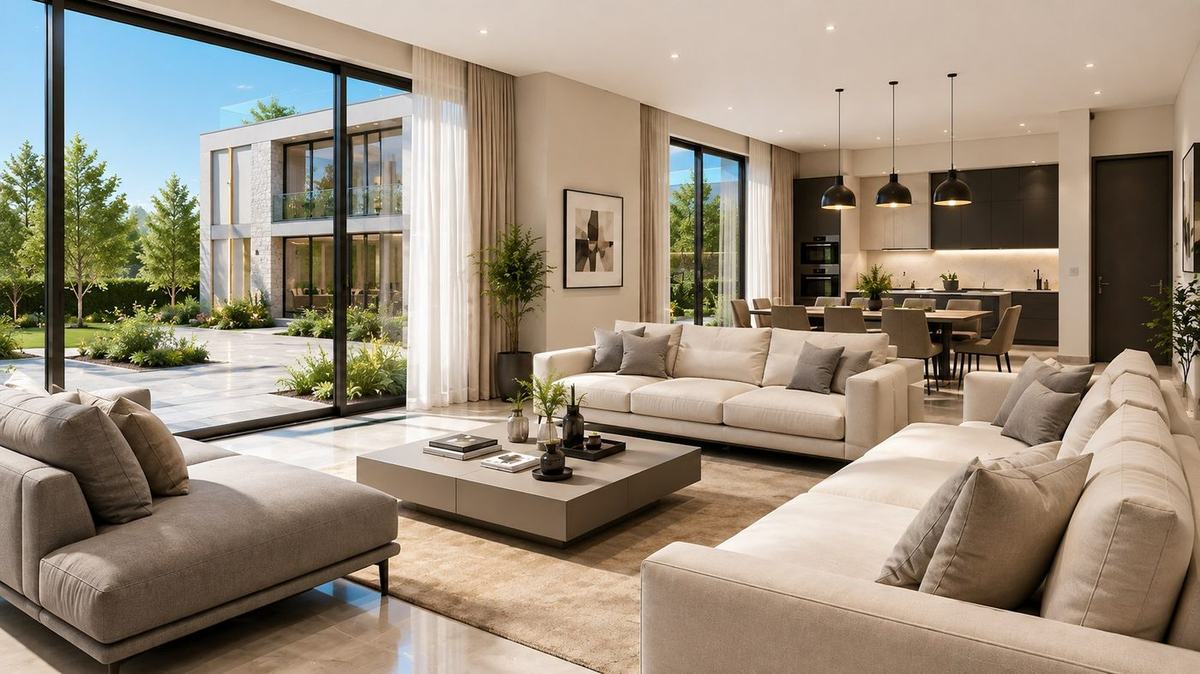
"How much does a smart home cost?" is the first question almost every client asks — and the honest answer is: it depends. Unlike buying a single product, home automation is a system tailored to your space, your priorities and your budget. This guide breaks down what actually drives the cost so you can plan with confidence.
What drives the price
- Size & number of zones: more rooms and lighting circuits mean more devices and wiring.
- Which systems you include: lighting only is far cheaper than a full package (lighting + climate + security + audio + shades).
- Technology (KNX vs wireless): KNX costs more upfront but delivers long-term reliability and expandability.
- Hardware brand & quality: premium keypads, touch panels and speakers raise the price.
- Project stage: installing during construction/fit-out is more efficient than retrofitting a finished home.
The three typical tiers
KNX vs wireless — the cost trade-off
Wireless is cheaper and faster to install, ideal for finished apartments. KNX is a wired, globally certified standard — higher initial cost, but rock-solid, expandable and built to last for years. For a villa under construction, KNX almost always wins on lifetime value.
Don't forget ongoing value
A good system isn't just install cost. Factor in warranty, local support and spare parts — and the savings a smart home returns through efficient lighting, climate control and (with solar) lower energy bills.
How to budget wisely
- Rank your priorities (security, energy saving, comfort).
- Design for the full home but install in phases if needed.
- Choose an expandable, certified system so you're never locked in.
- Confirm warranty and local support before you sign.
Get a tailored quote for your project
Our engineers assess your space and design a solution around your needs — across Egypt, the UAE and Saudi Arabia.
Request a free consultation