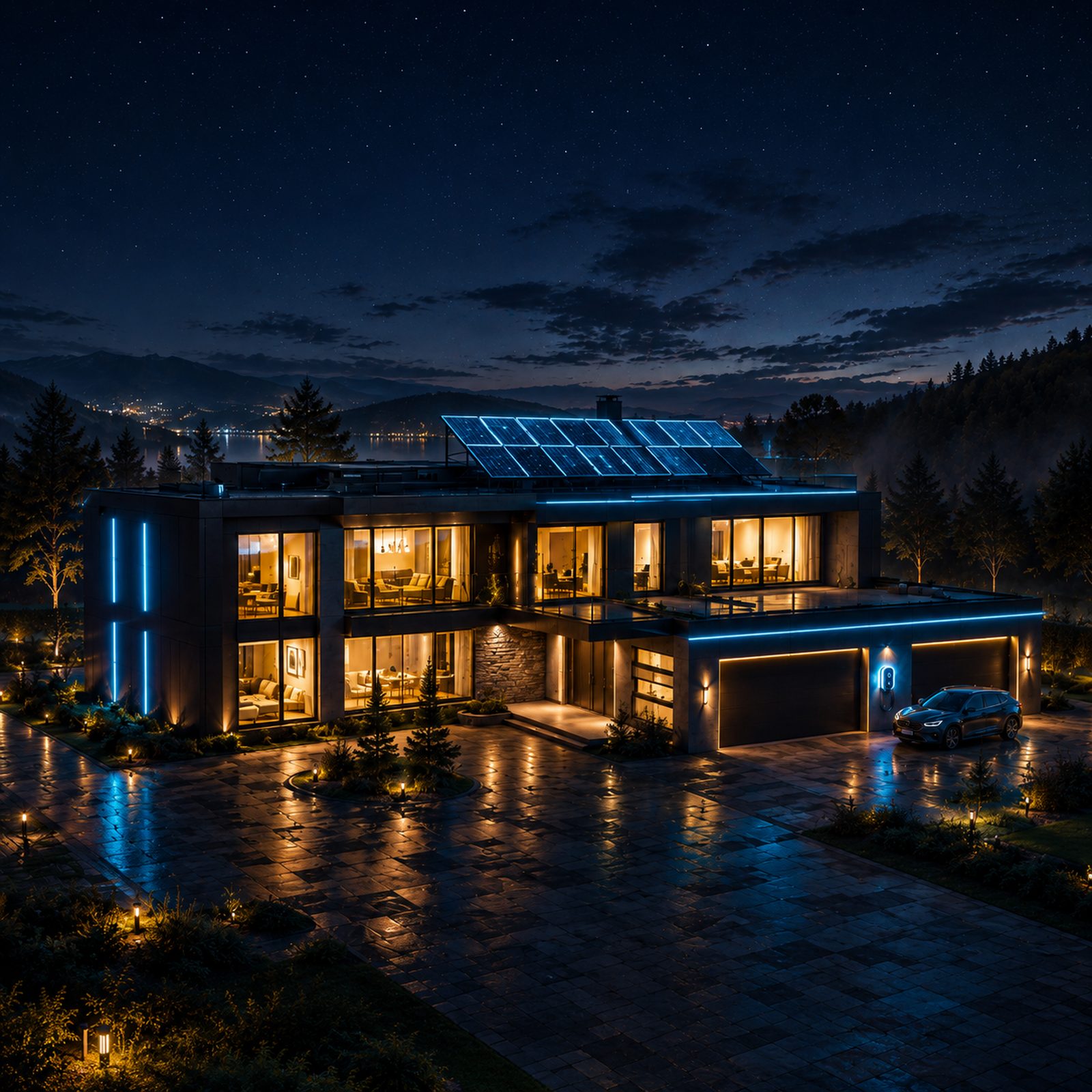
A smart home is no longer a luxury reserved for the few — today it's a practical upgrade that saves energy, adds real security, and makes daily life at home far easier. In this guide we'll explain, simply, what a smart home actually is, its key systems, how the technologies differ, and what drives the cost — so you can start the right way.
What is a smart home?
In short, it's controlling your home's devices — lighting, climate, shades, security, audio — from one place: your phone, a keypad, or fully automatic without you lifting a finger. For example, a single "Leaving Home" scene can switch off all the lights, turn off the AC, and arm the alarm with one tap.
The core systems to start with
- Smart lighting: zone-by-zone control, dimming, and ready-made scenes (guests, cinema, sleep).
- Climate & comfort: a smart thermostat that saves energy and sets the temperature around your schedule.
- Shades & curtains: automatic open/close based on the sun or time of day.
- Security: cameras, alarm, and access control — with alerts straight to your phone.
- Audio & home cinema: multi-room sound and a high-quality cinema experience.
- Energy management: integration with solar power and EV charging.
KNX or wireless?
This is the most important technical decision. In brief:
KNX (wired)
A globally certified standard — extremely stable and reliable, ideal for villas and larger projects still under construction or fit-out. It lasts for years and expands easily, but it needs wiring installed during the finishing stage.
Wireless systems
Faster and cheaper to install, and ideal for apartments or finished homes where you don't want to break walls. Lifespan and expandability are usually lower than KNX.
The rule of thumb: villa under construction → KNX. Finished apartment → wireless. A good company will advise the best fit for your case.
What drives the cost
There's no single fixed number, because cost depends on:
- Home size and number of rooms — every zone adds cost.
- How many systems — lighting only is cheaper than a full package (lighting + security + audio + climate).
- Technology — KNX costs more upfront but delivers higher long-term value.
- Hardware brand and quality.
- Project stage — installing during fit-out is cheaper than retrofitting a finished home.
How to start the right way
- Define your priorities (security? energy saving? comfort?).
- Ask for a site assessment before finishing, if possible.
- Choose an expandable system so you can add more later.
- Confirm the warranty, support and local maintenance.
Want to know the cost of turning your home into a smart home?
Our engineers assess your space and design a solution around your needs — across Egypt, the UAE and Saudi Arabia.
Request a free consultation